
Buying Guides
Type-C Earphones: DAC vs Analog — A Compatibility Guide for Buyers and Importers
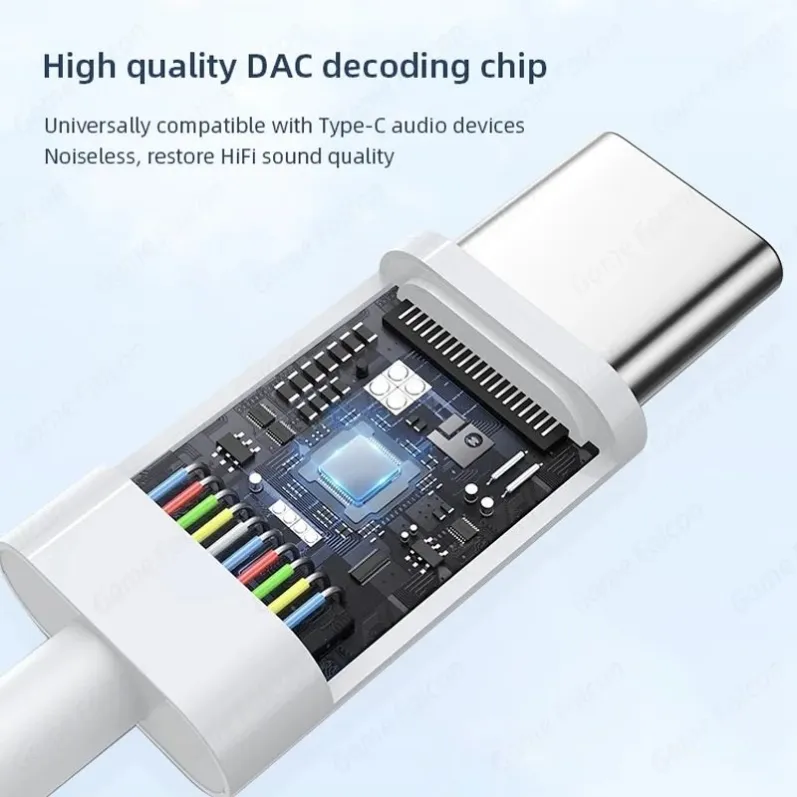
If you import Type-C earphones, compatibility is the question your customers will ask first — and the one that decides your return rate. Two earphones can look identical, use the same USB-C plug, and behave completely differently on the same phone. The reason is a small chip inside the plug, and whether it is there at all.
The two kinds of Type-C earphones
An analog Type-C earphone has no chip. It relies on the phone itself to send an analog audio signal through the USB-C port — a mode called Audio Accessory Mode. Some phones support it, many do not. On an unsupported phone, an analog earphone is simply silent.
A DAC earphone carries a digital-to-analog converter chip in the plug. The phone sends digital audio, the chip converts it, and the earphone works on any USB-C device with USB audio output — including the iPhone 15 and 16 generations, Samsung Galaxy models and most current Android phones. This is why our EM-F4C Type-C earphones are built with a DAC chip: one model that covers the whole market.
Why this matters for importers
Every incompatible pair comes back as a return, a refund or a one-star review — and the buyer blames your store, not the phone maker. Sellers who stock analog-only models for markets full of newer phones learn this the expensive way. A DAC model costs slightly more per piece and removes the problem entirely: your listing can honestly say "works with all USB-C phones".
There is also a middle path. Some of our half in-ear models, like the EM-F3C, come in two versions — a Type-C version with an IC chip and a classic 3.5mm version — so you can match the version to each sales channel instead of forcing one plug on every buyer.
What to check before you order
First, ask which chip the earphone uses, and get the answer in writing in the specification. Second, test samples on the exact phones your market uses most — at minimum one recent iPhone, one Samsung and one budget Android. Third, check the microphone and in-line remote on a real call, not just music playback; button behaviour differs between platforms. Fourth, if you sell under your own brand, confirm the OEM options — logo, colour and retail packaging — before you commit to a quantity.
Our recommendation
For online sellers and distributors, we recommend a DAC model as your main Type-C line, and a dual-version model if you also serve 3.5mm demand. Both of ours start from small MOQs, with samples in 5–7 days. Send us your target phones and market and we will confirm compatibility before you order.